
Artificial Intelligence
Deepfake Detection and Defense: How Businesses Protect Against AI-Generated Threats
Learn how enterprises can detect deepfakes, prevent AI-driven fraud, protect identities, and strengthen digital trust and security.
 AI & DataAgentic AI, computer vision, generative AI
 App DevelopmentWeb, mobile, and custom software
 SecurityEngineering, warehousing, analytics
 AgtechFarm, livestock, and crop software
 FoodtechTraceability and food supply chain
 Digital HealthEHR, telehealth, and interoperability
 NetSuiteERP implementation and support
 Microsoft DynamicsDynamics 365 and Business Central
 SalesforceCRM consulting and integration
 EcommerceB2B ecommerce, ERP integrations and migrationsAI & DataAgentic AI, computer vision, generative AIApp DevelopmentWeb, mobile, and custom softwareSecurityEngineering, warehousing, analyticsAgtechFarm, livestock, and crop softwareFoodtechTraceability and food supply chainDigital HealthEHR, telehealth, and interoperabilityNetSuiteERP implementation and supportMicrosoft DynamicsDynamics 365 and Business CentralSalesforceCRM consulting and integrationEcommerceB2B ecommerce, ERP integrations and migrations
Learn how enterprises can detect deepfakes, prevent AI-driven fraud, protect identities, and strengthen digital trust and security.
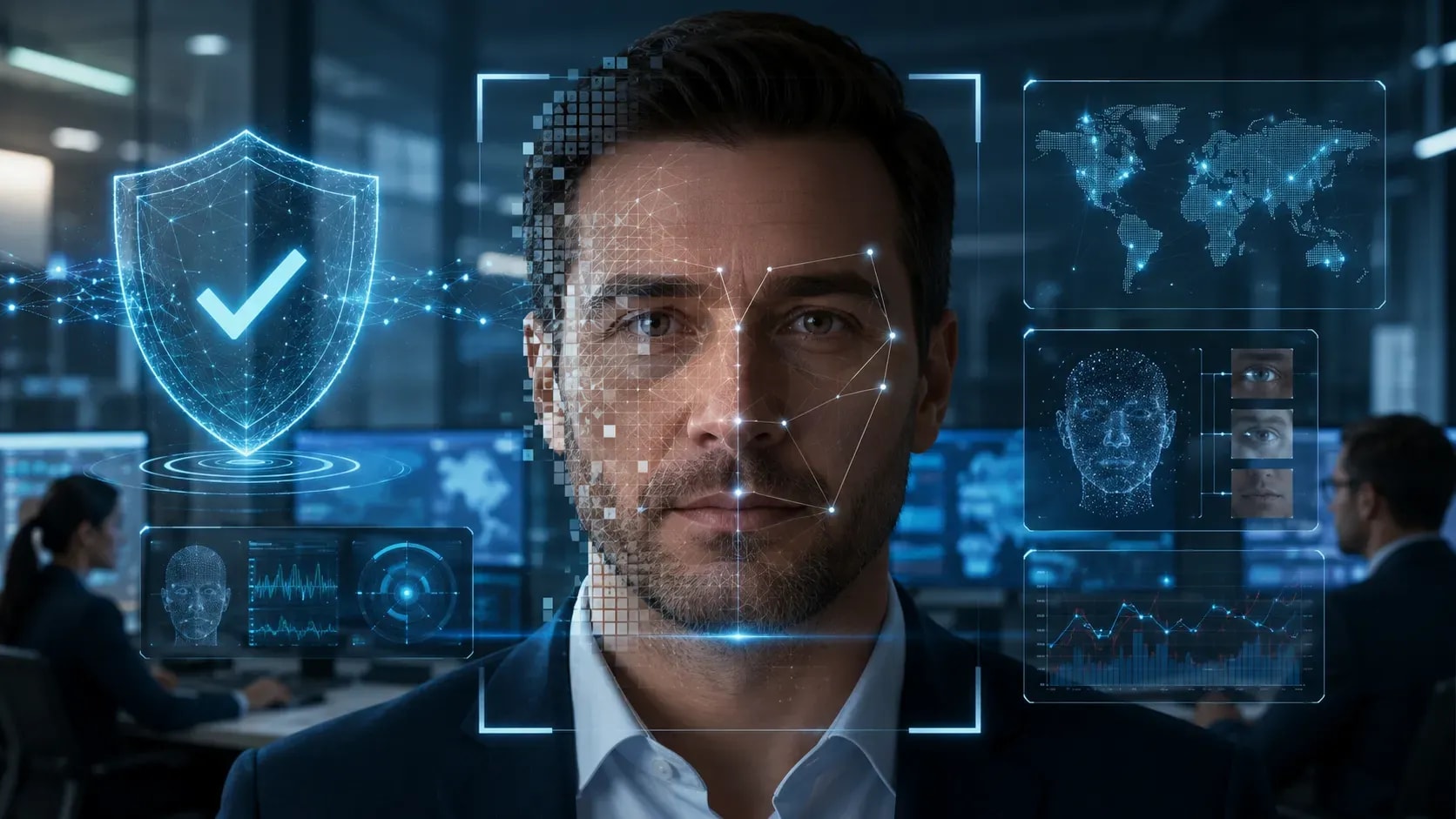
Deepfakes have evolved from online entertainment into a serious business security threat. The FBI warns that criminals use AI-generated audio, video, images, and messages to conduct fraud against individuals and businesses. In 2024, engineering firm Arup confirmed that attackers used fabricated voices and images during a video conference to steal approximately $25 million.
Organizations now require reliable deepfake detection and computer vision capabilities, stronger identity verification, employee awareness, and clear response procedures. This guide explains how deepfakes work, the risks they create, and how businesses can detect and prevent AI-powered impersonation attacks.
Deepfakes are artificially generated or manipulated images, videos, and audio recordings designed to imitate real people. They can reproduce someone’s appearance, voice, expressions, movements, or communication style.
Deepfakes use artificial intelligence to alter authentic media or produce entirely synthetic content. The resulting material may show a person performing actions or making statements that never occurred.
Synthetic media includes face swaps, facial reenactments, voice clones, generated identities, altered documents, and fabricated video calls. Attacks may combine several formats to make impersonation more convincing.
Folio3 AI develops custom solutions that help businesses detect manipulated media, suspicious identities, fraudulent activity, and AI-powered impersonation across critical digital workflows.
Get StartedBusinesses control valuable payments, confidential information, customer records, and intellectual property. Attackers exploit trusted relationships and urgent workflows to make fabricated requests appear legitimate.
Executives and finance teams can authorize substantial payments. Impersonating these individuals allows criminals to request wire transfers, change supplier details, or pressure employees into bypassing established approval procedures.
Employees often recognize senior leaders by their faces and voices. Deepfakes exploit this familiarity, creating false confidence that a request came from a trusted and authorized individual.
Interviews, webinars, earnings calls, podcasts, and conference recordings provide samples of executive voices and appearances. Attackers may use this public material to improve impersonation attempts.
Attackers frequently introduce urgency, confidentiality, or authority into their requests. Employees may be instructed to act immediately, avoid contacting colleagues, or bypass normal verification processes.
Deepfake systems learn visual, vocal, or behavioral characteristics from existing data. Understanding the creation process helps security teams identify artifacts and select suitable detection methods.
Generative models study patterns within authentic images, video, or audio. They then recreate those patterns to produce synthetic content that resembles the targeted person.
Face-swapping technology replaces one person’s facial identity with another. The system attempts to preserve surrounding movement, lighting, expressions, and head position while inserting the targeted appearance.
Facial reenactment alters expressions, lip movements, eye direction, or head motion within existing footage. It can make a person appear to say words or display reactions they never produced.
Voice-cloning systems analyze tone, rhythm, accent, pronunciation, and speaking patterns. The resulting synthetic voice can deliver newly written statements while sounding similar to the targeted person.
Attackers may combine generated faces, cloned voices, fabricated records, and stolen personal information. These synthetic identities can support fraudulent onboarding, account creation, or prolonged social-engineering campaigns.
Deepfakes can affect payments, recruitment, customer verification, vendor communication, and public messaging. Each scenario requires independent verification and strong identity controls.
Criminals may imitate senior executives during calls, video meetings, emails, or voice messages. They often request urgent transfers, authentication codes, confidential documents, or changes to payment instructions.
Attackers can impersonate suppliers and request updated banking details. Without confirmation through an established contact, employees may redirect legitimate payments into criminally controlled accounts.
Synthetic identities may help applicants conceal their actual identity during remote interviews. Successful applicants could later access customer information, internal systems, financial records, or proprietary source code.
Deepfake video and audio may be used to defeat remote identity checks, biometric verification, or account-recovery processes. These attacks are especially dangerous during high-value transactions.
An attacker may impersonate an executive or technical employee and request passwords, authentication codes, or system access. The deepfake strengthens an otherwise conventional phishing or social-engineering attempt.
Fraudsters can imitate company representatives to promote fake products, fraudulent investments, or malicious websites. Such campaigns can harm customers while weakening trust in the legitimate brand.
Fabricated executive statements can affect employees, customers, investors, and regulators. Even after the content is disproved, organizations may experience lasting uncertainty and reputational damage.
Different industries face distinct deepfake risks because their assets, approval processes, and customer relationships vary. Detection programs should reflect each organization’s operational environment.
Banks face account takeover, executive impersonation, fraudulent onboarding, investment scams, and biometric bypass attempts. Effective AI fraud detection solutions should evaluate identity, behavior, transactions, and media authenticity.
Healthcare organizations may encounter fabricated provider identities, manipulated telehealth sessions, false patient verification, or altered medical evidence. These attacks can affect privacy, reimbursement integrity, and patient safety.
Publishers and broadcasters must verify submitted footage before publication. Manipulated recordings can spread misinformation, influence public opinion, or undermine confidence in legitimate reporting.
Deepfake identities can support account takeover, payment fraud, fraudulent returns, and customer-service manipulation. Criminals may also impersonate brand representatives in fake advertisements.
Legal, consulting, engineering, and technology firms handle sensitive client information and significant transactions. The Arup incident demonstrated how fabricated participants in a video conference could enable large-scale financial fraud.
Deepfakes can impersonate public officials, spread false instructions, or target government contacts. In 2025, the FBI warned about malicious actors using AI-generated voices to impersonate senior officials.
Protect your organization with AI-powered detection capabilities built to identify deepfakes, impersonation attempts, identity risks, and suspicious activity before they disrupt business operations.
Talk to an ExpertDeepfake detection combines visual, audio, behavioral, contextual, and technical analysis. Businesses should avoid relying on one indicator or detection model.
Detection systems inspect facial boundaries, skin texture, reflections, teeth, hair, blinking, and expression transitions. Inconsistencies may indicate that facial regions were generated, reconstructed, or blended.
Models examine movement across consecutive frames. Unnatural head motion, unstable facial features, irregular expressions, or mismatched movement around altered regions may indicate manipulation.
Behavioral analysis compares facial expressions, head movements, speech patterns, and interaction habits with known behavior. Research has demonstrated detection approaches combining facial recognition with temporal behavioral signals.
Audio analysis evaluates frequency patterns, breathing, background noise, pauses, pronunciation, and speech transitions. Irregularities may reveal that a voice was generated or edited.
Detection systems compare visible mouth movements with spoken sounds. Differences between phonemes and lip positions may indicate manipulated video, replaced audio, or both.
Metadata may reveal editing software, encoding history, file creation details, or missing camera information. However, metadata can be removed and should not serve as the only evidence.
Digital signatures, watermarks, and content credentials can document where media originated and how it changed. Provenance supports authenticity verification before content is trusted or distributed.
Technical analysis should be combined with facial recognition and biometric authentication. Security teams must also assess whether the request matches normal behavior, authority, and business context.
Generative models increasingly reproduce realistic lighting, movement, voices, and expressions. Real-time manipulation and media compression further reduce the reliability of basic visual inspection.
Newer models produce fewer obvious defects around faces, mouths, hands, shadows, and backgrounds. Employees can no longer assume every deepfake will contain easily visible errors.
Attackers can manipulate voices and appearances during live meetings. Real-time generation pressures recipients to make decisions before content can undergo detailed forensic analysis.
Communication platforms frequently compress uploaded video and audio. This process can conceal manipulation evidence while introducing similar artifacts into authentic content.
Detection systems trained on known generators may perform poorly against newer tools. Detection programs therefore require continuous testing, representative data, and regular model updates.
Attackers may resize, crop, compress, filter, or re-record synthetic media. These modifications can reduce the effectiveness of detectors that rely on specific technical artifacts.
Preventing deepfake fraud requires technical controls, independent verification, employee awareness, and governance. Organizations must reduce their dependence on faces and voices when authorizing sensitive actions.
Employees should confirm high-risk requests through a separate, approved channel. They must not use contact information provided within the suspicious communication itself.
Organizations can establish confidential words or challenge questions for sensitive conversations. These phrases should be protected, changed periodically, and never shared through public channels.
Authentication should combine independent factors rather than relying exclusively on facial or voice recognition. Secure devices, cryptographic credentials, access policies, and behavioral signals provide stronger protection.
High-value payments should require dual authorization, verified beneficiary records, transfer limits, and documented approval. Changes to supplier banking information must receive independent confirmation.
Training should include realistic deepfake fraud scenarios. Employees need permission to pause urgent requests, challenge unusual instructions, and escalate concerns without fearing criticism for delaying a transaction.
Organizations should monitor unauthorized profiles, fabricated advertisements, manipulated statements, and fraudulent domains. Early detection allows security, legal, and communications teams to act before campaigns spread.
Companies should assess how much executive voice and video material is publicly available. Exposure cannot be eliminated, but unnecessary high-quality samples can be limited.
An AI governance and compliance framework should define acceptable synthetic-media use, consent requirements, verification standards, escalation responsibilities, evidence retention, and reporting procedures.
A suspected deepfake requires immediate containment, verification, evidence preservation, and coordinated investigation. Financial, technical, legal, and reputational risks should be addressed simultaneously.
Employees should stop transfers, account changes, data disclosures, or access approvals linked to the suspicious communication. Delaying action is safer than relying on unverified urgency.
Contact the represented person using a verified telephone number, secure application, or established internal process. Do not continue verification through the potentially compromised channel.
Retain original audio, video, messages, account details, timestamps, and transaction requests. Forwarding, compressing, or screen-recording media may remove useful forensic information.
Security teams should evaluate facial artifacts, audio characteristics, metadata, behavior, identity, and context. High-impact incidents may require specialized computer vision or digital-forensics support.
Disable compromised credentials, revoke active sessions, review privileged access, and reset authentication methods. Investigators should examine related accounts for coordinated social-engineering activity.
Organizations should immediately report suspicious or completed transfers to relevant banks and payment providers. Rapid notification may improve the possibility of freezing or tracing funds.
Security, leadership, legal, compliance, and public-relations teams should follow an agreed communication plan. Consistent messaging helps stakeholders distinguish fabricated material from verified organizational statements.
Organizations may need to inform law enforcement, regulators, insurers, customers, or affected partners. Reporting obligations depend on the jurisdiction, industry, exposed information, and resulting harm.
Deepfake incidents may trigger privacy, biometric, fraud, intellectual-property, and industry-specific requirements. Legal teams should determine applicable obligations before collecting, analyzing, or sharing evidence.
Facial features and voiceprints may qualify as biometric or personal data. Their collection and processing can require consent, defined purposes, security safeguards, retention limits, and access controls.
Deepfake attacks may violate existing fraud, identity-theft, and impersonation laws. The FTC has specifically identified AI-generated deepfakes as an expanding impersonation threat.
Synthetic media may reproduce copyrighted recordings, trademarks, voices, or protected likenesses. Organizations need appropriate permission, licensing, attribution, and removal procedures before using generated media commercially.
Organizations should preserve original files, access logs, transaction records, communications, and investigation notes. Proper retention supports forensic analysis, regulatory reporting, insurance claims, and legal proceedings.
Financial, healthcare, insurance, and public-sector organizations may face additional authentication, recordkeeping, customer-protection, and incident-reporting requirements.
A sustainable defense program combines detection technology, identity controls, employee training, governance, and incident response. Each component should support established cybersecurity and fraud-management processes.
Identify executives, departments, transactions, communication channels, and public media most likely to be targeted. Prioritize workflows involving payments, credentials, confidential information, or public announcements.
Apply stronger controls to higher-risk actions. A routine internal conversation may require limited verification, while a large transfer should require independent approval and authentication.
Connect deepfake detection with video platforms, identity systems, fraud tools, and security operations. Integrated workflows allow suspicious media to be reviewed before decisions are finalized.
Run simulations involving executive calls, supplier changes, recruitment interviews, and customer verification. Testing reveals weaknesses in procedures, technology, employee awareness, and escalation paths.
Track detected attempts, employee reporting rates, response times, false positives, prevented losses, and control failures. These measures help justify investment and guide program improvements.
Deepfake techniques will continue evolving. Organizations should refresh training, detection models, threat intelligence, verification procedures, and response plans as new attack patterns emerge.
Work with Folio3 AI to create a tailored detection solution for deepfake content, fraudulent identities, suspicious transactions, and emerging AI-enabled risks across your organization.
Contact UsA deepfake is AI-generated or manipulated video, audio, or imagery designed to imitate a real person, event, statement, or identity.
Deepfakes can enable payment fraud, identity theft, credential compromise, disinformation, unauthorized access, and reputational damage by impersonating trusted individuals.
No. Detector accuracy varies by media quality, generation technique, compression, training data, and environment. Detection should be combined with identity and contextual verification.
Financial services, healthcare, government, media, ecommerce, and professional services face substantial risks because they manage valuable transactions, identities, information, or public communications.
They should pause sensitive actions, end the conversation when necessary, and verify the participant through a separate, previously approved communication channel.
Multi-factor authentication reduces risk when it uses independent credentials or secure devices. Systems relying only on facial or voice biometrics remain vulnerable to impersonation.
Legality depends on the jurisdiction and purpose. Fraudulent deepfakes may violate impersonation, fraud, privacy, intellectual-property, election, or identity-theft laws.
Organizations should review controls regularly and after major incidents, technology changes, new threat intelligence, detection failures, or changes to high-risk business processes.